How Much Exercise Do You Really Need, and What Kind Works Best After 40
Once you’ve started moving more, maybe walking, stretching, or doing short workouts, the next question usually comes up:
“Okay, but how much exercise do I actually need to see results?”
Let’s simplify the confusion and give you the real answer, one that fits your life, your body, and your goals.
The Basics: How Much Is Enough?
According to the American College of Sports Medicine (ACSM) and the CDC, adults should aim for:
150 minutes per week of moderate-intensity activity (brisk walking, light cycling, or similar)
or75 minutes of vigorous activity (running, fast cycling, or higher-intensity circuits)
Plus at least two strength-training sessions targeting all major muscle groups
That’s the minimum for health, not necessarily for progress.
If you want to lose fat, build strength, improve mobility, and age well, you’ll likely need a little more intention and variety.
Strength Training: The Game Changer After 40
If I could shout one message from the rooftops, it would be this:
Strength training is non-negotiable after 40.
Here’s why:
After 30, many people lose muscle, not from age, but from inactivity. Use it, and you can keep it.
Resistance training reverses that loss, helping you stay strong, independent, and confident.
It improves bone density, balance, and joint stability, which is crucial for avoiding injuries and staying active.
It reshapes your body in a way that cardio alone never will.
You don’t have to lift like a bodybuilder.
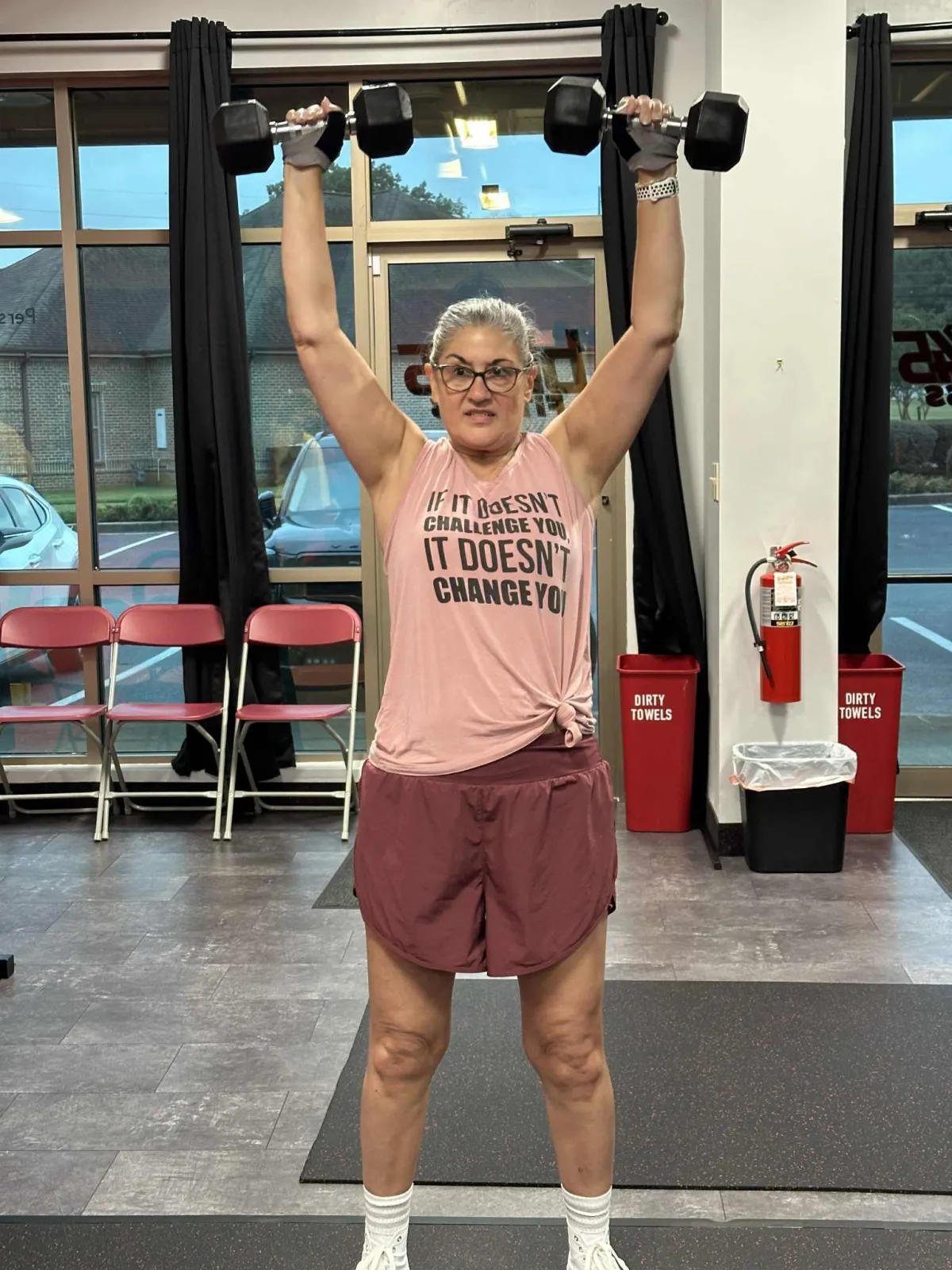
Two to three 45-minute sessions per week, focused on functional movements like squats, presses, rows, and carries, are plenty to transform your body and how you feel day to day.
Cardio: For Your Heart and Your Head
Cardio gets a bad reputation in some circles, but it’s still important, especially when done right.
The key is intentional effort:
Mix brisk walking, jogging, biking, or intervals that elevate your heart rate.
Aim for two to three sessions per week.
Choose activities you enjoy, so consistency sticks.
Cardio improves heart and lung health, helps regulate blood pressure, and supports stress management.
When paired with strength training, it’s the perfect balance of endurance and power.
Mobility and Recovery: The Missing Piece
After 40, recovery is training.
Mobility work, stretching, and walking on rest days keep your joints healthy and your body primed for the next workout.
Five to ten minutes of mobility work before and after sessions can dramatically reduce stiffness and pain.
A Sample “Strong After 40” Week
Here’s what a realistic, balanced week might look like:
Day Focus Example
Mon Strength Full-body session (push, pull, legs)
Tue Cardio / Movement Brisk 30-min walk or bike ride
Wed Strength Semi-private session or circuit
Thu Mobility / Recovery Gentle stretching or yoga
Fri Strength Focus on form and progression
Sat Cardio / Play Hike, run, or family activity
Sun Rest / Light Walk Active recovery
That’s not extreme, it’s sustainable.
And that’s what actually changes your life long-term.
The Real Goal
The goal isn’t perfection.
It’s not checking boxes or chasing exhaustion.
It’s building a body that works, one that supports your lifestyle, energy, and confidence for decades to come.
When you combine strength training, cardio, and daily movement, you create a foundation for health that lasts, not just a quick fix.
Ready to Train Smarter, Not Longer?
At Blitz45 Fitness Madison, we help men and women 40 plus build strong, capable bodies through personalized, semi-private strength training.
You don’t need hours in the gym. You need a smart plan and accountability.
Book your free consultation today: https://api.leadconnectorhq.com/widget/booking/qWeQroB8lllCgQSZ1kyW
Let’s build your schedule, your strength, and your confidence, together